The Last Quiet Job in the Data Center
Everything in the building is automated except the person walking its aisles at 3 a.m. A night shift with the technicians who keep the cloud physical.

By Jonas Feld, Technology Reporter
July 25, 2026
7 min read
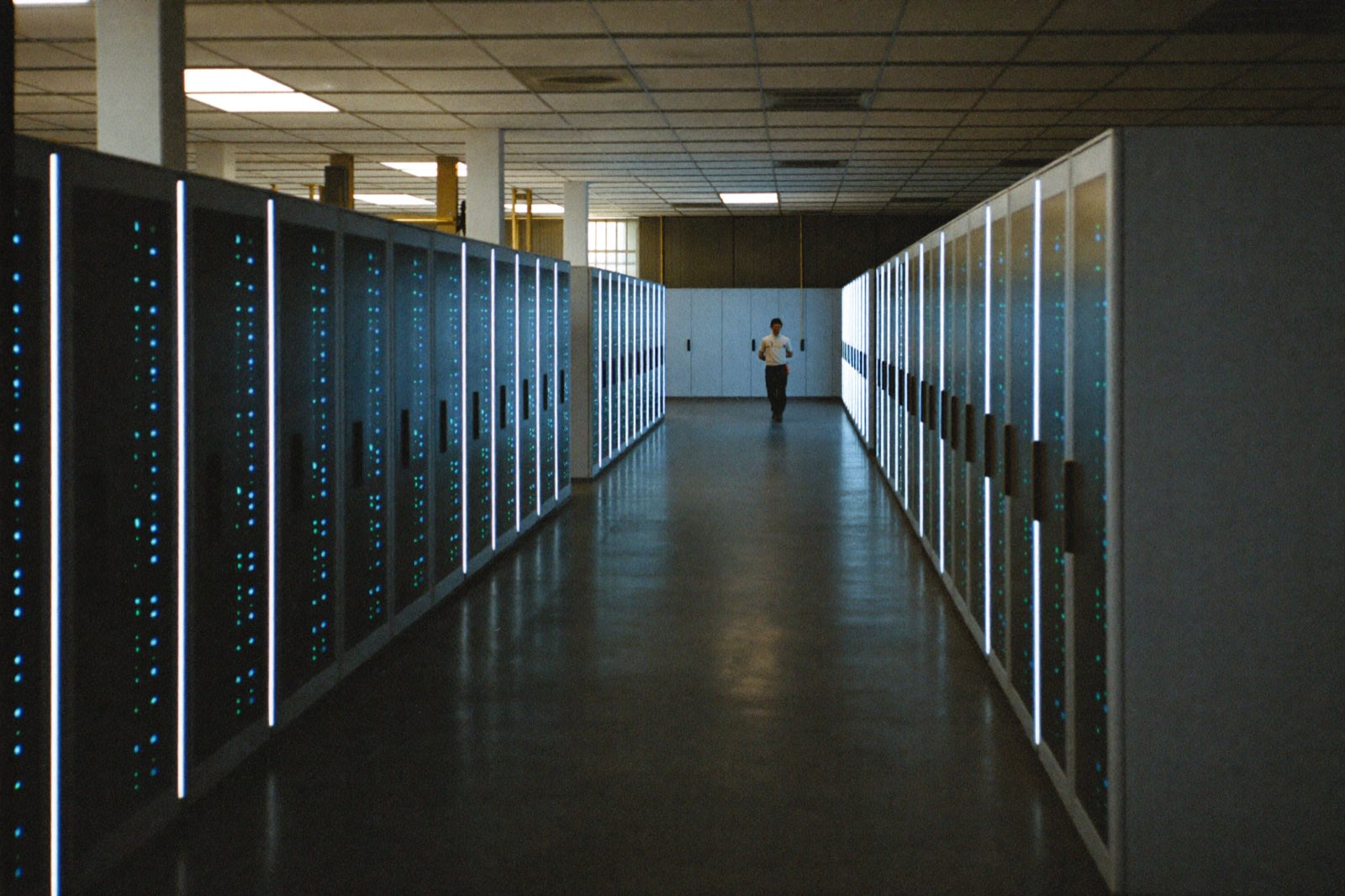
At three in the morning the building sounds like weather. Forty thousand servers exhale together, a white pressure of fans and chilled air that Marisol Vega has learned to read the way a sailor reads wind. She is one of two humans in a facility the size of six football fields, and her job, on paper, is to walk. Down aisle C-14, past the blinking acre of machines that hold, among other things, a continent's photographs, a bank's ledgers, and the game your nephew is losing at this exact moment.
Almost nothing in the building requires her. Software provisions the servers, balances their loads, predicts their failures, and files the tickets. Robots in some newer facilities even swap the failed drives. What the operators of these buildings have quietly rediscovered is the value of the one sensor that notices what it was not asked to notice — the tape in a cooling seam that has begun to peel, the smell of a capacitor two weeks before it lets go, the wrong kind of silence at the far end of a hot aisle.
What the dashboards miss
Vega's employer runs one of the largest automated monitoring systems in the industry: eleven million telemetry points, sampled continuously. Last year, by the company's own internal accounting, walk-throughs still caught a meaningful share of the incidents that mattered — the ones the dashboards flagged late or not at all. The list reads like a poem about entropy: a weeping pipe joint, a bird in an intake, a contractor's forgotten ladder resting against a busbar.
The system knows the temperature of every rack to a tenth of a degree. It does not know the ladder is there. Knowing about ladders is my whole job.
Marisol Vega, critical-environment technician
There is a name for this in the trade — "eyes on glass" for the people watching screens, "boots on concrete" for the ones walking. The boots are outnumbered a thousand to one by the sensors, and yet every operator I spoke to is hiring more of them, not fewer. One facilities director put it plainly: automation removed every job in the building except judgment.
The apprenticeship problem
The catch is that judgment used to be a byproduct. You learned what a dying fan sounded like because you spent years replacing fans. Now the fans replace themselves, and the industry is discovering it must teach deliberately what it once taught by accident. Vega's company runs a program that amounts to a conservatory for machine intuition: junior technicians shadow the night walkers, drilling on recordings of past failures the way medical students drill on old X-rays.
Near the end of her shift, Vega stopped mid-aisle for no reason I could see, backtracked three racks, and rested her palm flat against a server chassis like a veterinarian checking a flank. The dashboard called the rack healthy. She filed a ticket anyway. Four days later, the drive controller she flagged failed — gracefully, at ten in the morning, into the waiting hands of the day shift, which is the entire point.